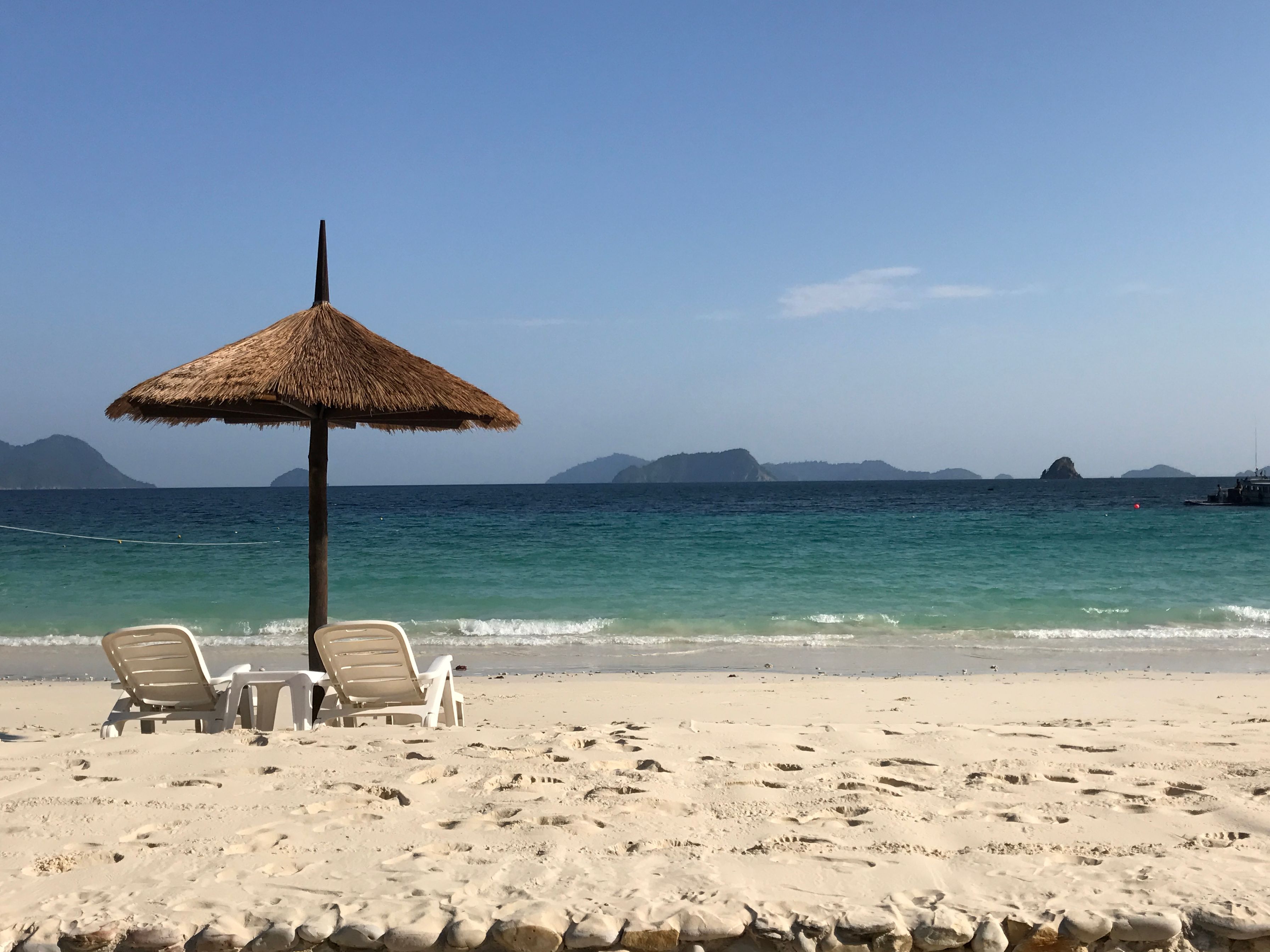
Bamboo Island
Come in the long way—where the sea turns quiet, and Bamboo Island reveals itself a shade at a time.
Approaching Bamboo Island from the North Channel changes the entire story. Instead of arriving to a postcard, you arrive to a sequence—sea that deepens, then softens, then suddenly turns translucent as the lagoon opens up and the island’s pale sandline begins to glow.
Most people miss how engineered your first impression can be. Boats often swing in fast from the busier side, drop anchors, and turn the place into a quick swim stop. From the North Channel, the island reads like a living shoreline—sandbar edges, shifting currents, and a rim of casuarina that holds the light like a diffuser.
The payoff is subtle and physical. Your shoulders unclench before you even step off the boat. You feel the tempo slow, and the lagoon becomes less of a “view” and more of a room you’ve entered—bright, quiet, and temporarily yours.
The Lagoon Isn’t a Place—It’s a Timing
Bamboo Island (Koh Mai Phai) is often sold as a single image: white sand, turquoise water, a quick snorkel. But the island’s most luxurious feature isn’t the color—it’s the way the lagoon behaves when you arrive from the North Channel. Here, the water is less interrupted by wake and less crowded by boats cutting across the shallows, so the surface holds its clarity for longer. You notice how the palette shifts in layers: deeper blue outside, then a band of milky aquamarine where sand begins, then a glassy, almost transparent zone that makes you slow down instinctively. What most people miss is the lagoon’s edge—the working seam where currents pull and lay sand in delicate arcs. If you watch for a minute, you see the place breathing: tiny rip lines, silt lifting and settling, schools of small fish flickering like punctuation marks in the shallows. This is also where Bamboo Island feels least “day-tripped.” Step away from the loudest cluster of towels and you hear the island’s real soundtrack—wind moving through casuarina needles, the dry whisper of branches, the soft knock of shells turning in the wash. Arriving this way gives you a sense of permission: to linger, to swim slowly, to let the scene unfold without forcing it into a checklist. You don’t just visit the lagoon. You enter it at the right speed.
You come in with the bow pointed between low limestone silhouettes, the engine note flattening as the North Channel takes you into calmer water. Spray turns to a fine mist on your forearms, salty and cool, and the color starts doing its quiet trick: navy loosens into cobalt, then into a clear jade that shows you the sandy bottom as if the sea has lifted a veil. Bamboo Island sits ahead like a pale brushstroke—white sand, a thin band of green, and the vertical punctuation of casuarina. As the lagoon opens, sound changes. The slap of chop becomes a soft shush, and you hear the small things: rigging tapping, a distant longtail idling, your own breath timing itself to the swell. You step down into water that is warm but not sleepy, sliding over your ankles with the feel of silk. The sand is fine and bright, almost luminous, and the island’s shade smells faintly of sun-warmed needles and clean resin. You look back and realize the best view is the one you’re leaving behind—the channel framing the lagoon like a slow reveal.
The Water
The water runs in gradients that feel almost edited: deep indigo in the channel, then a clean cobalt, then a jade-green shallows that turns glass-clear over pale sand. On calm mornings, the surface reflects the sky so cleanly you can’t tell where blue ends and water begins.
The Cliffs
Bamboo Island is a low, sandy island fringed with casuarina and ringed by shallow reefs and sandbars that shift with tide and season. The North Channel approach gives you the wider limestone context—distant karst forms that make the lagoon feel like a protected basin rather than an open stop.
The Light
Late morning gives you the brightest, most readable water—sun high enough to punch through and reveal the sand textures. Golden hour is softer and more editorial, turning the lagoon a muted teal and backlighting the casuarina line with a fine, needle-like glow.
Best Angles
North Channel approach (on the boat, final 5–10 minutes)
You get the full color transition—deep to clear—and the sense of the lagoon “opening” like a lens widening.
Shallow sandbar edge (walk the firm sand where the water thins)
The ripples become graphic patterns, and the water reads as layered bands rather than a single turquoise sheet.
Casuarina shade line (just behind the beach)
A cooler, quieter frame—needles, dappled light, and the bright lagoon beyond for contrast.
Snorkel line off the reef lip (outside the busiest swim zone)
For photographers, the reef edge gives depth and scale—fish in foreground, lagoon color behind, boats reduced to small shapes.
Low-water shoreline (ankle-deep, facing back toward the channel)
The intimate angle—your footprints, the hush of the wash, and the channel framed like a departing scene.
Bring reef-safe sunscreen and apply it well before swimming—the lagoon’s clarity makes every slick and shimmer visible, including oil on the surface.
Pack a thin long-sleeve rash guard; the light off pale sand and shallow water amplifies sun exposure even when it doesn’t feel hot.
Wear water shoes if you plan to explore the reef edge—beautiful, but not forgiving on bare feet.
Carry small cash for boat arrangements and park fees where applicable; card payment is not always reliable at departure points.
If you’re sensitive to crowds, ask your boat to linger offshore for a few minutes on arrival—those extra moments often align you with quieter pockets of beach.
Handpicked Stays & Tables
Places chosen for beauty and intention, not algorithms. Each one is worth your time.

Rayavadee
Railay Peninsula, Krabi
A classic, garden-lush base with dramatic limestone walls as your daily backdrop. You’re close to boat routes to Bamboo Island, but the real luxury is returning to quiet after the day-trips elsewhere peak.

The Tubkaak Krabi Boutique Resort
Tubkaek Beach, Krabi
A calmer stretch of mainland coast with a softer, more private rhythm than central Ao Nang. The sunsets are slow and painterly, and day excursions feel more deliberate when you’re not starting from the busiest strip.

Lae Lay Grill
Ao Nang, Krabi
Seafood with an elevated, hillside perspective—use it as a post-boat reset when you want breeze and view rather than beach noise. Order simply and let the ingredients do the work.

Jenna’s Bistro & Wine
Ao Nang, Krabi
A polished, intimate room that feels like a palate cleanser after salt and sun. The wine list and careful pacing suit travelers who want one composed meal amid island days.
If you let the North Channel set the pace, Bamboo Island stops being a stopover and becomes a slow, luminous arrival.