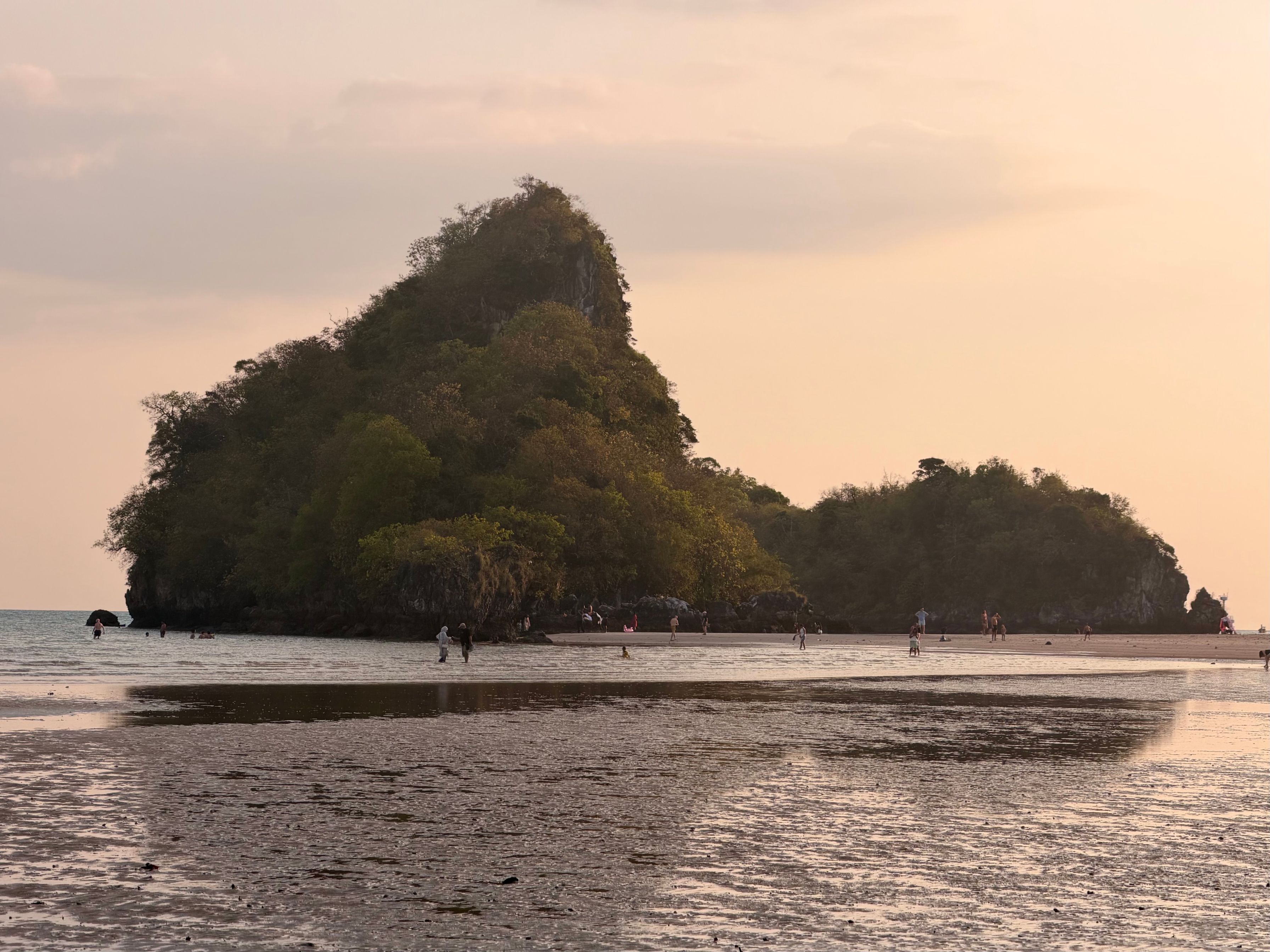
Ao Leuk Beach
When Koh Tao turns gray, Ao Leuk’s reef switches on—turquoise, cobalt, and neon fish under a soft sky.
On a cloudy morning, Ao Leuk Beach matters because it refuses the usual Thailand script—no blinding sun, no postcard glare, just a bay that looks quieter than it actually is.
Most people miss the way the reef behaves under overcast light: colors don’t wash out… they concentrate. The water becomes a lens, and the corals and fish read sharper, closer, more electric.
You leave with that rare kind of calm that feels earned—like you saw the island’s pulse rather than its performance.
The Overcast Advantage: Why Ao Leuk Glows When the Sun Disappears
Ao Leuk’s most flattering light isn’t the midday blaze people chase. It’s the low, diffused canopy of a cloudy morning—when shadows soften and the reef’s color stops fighting the surface glare. In bright sun, the bay can look theatrically pretty from the sand, but the water becomes a mirror; every ripple throws light back at you, and your eyes tire faster. Under cloud, that reflection quiets down. You see into the water instead of at it. This is where Ao Leuk’s shape matters. The bay is tucked in, with headlands that blunt wind and a sandy bottom that acts like a pale reflector. The result is a kind of underwater clarity that feels intimate rather than endless—fish appear closer, and coral textures read like fabric: velvety, ridged, stippled. Swim out along either side of the bay and you’ll notice the gradient: sand flats near shore, then scattered bommies, then denser coral structure where the rocks begin. The “electric” feeling comes from contrast—dark stone and soft sky above, saturated life below. Most visitors stand at the beach bar, scan the gray horizon, and decide it’s not a beach day. If you treat it as a reef day instead, Ao Leuk gives you something rarer than sunshine: a sense of being inside the island’s color, not just looking at it.
You arrive while the sky is still deciding what it wants to be—pewter clouds, a thin brightness pressed behind them. Ao Leuk opens in a gentle curve, framed by dark granite and a fringe of palms that hiss softly in the breeze. The sand is pale and fine, cool underfoot, and the water at the edge is not the expected tropical glass but something moodier: jade with a milky sheen. You wade in and the temperature shifts, a clean, wake-up chill around your ankles before it turns silkier at knee depth. Then you slip your face under the surface and the whole bay changes character. The gray morning turns into a private lightbox—parrotfish flashing acid green, sergeant majors striped like enamel, coral heads glowing with muted violets and rusts that feel impossibly saturated. You hear your own breath, slow and metronomic in the snorkel, while tiny clicks from the reef stitch the silence. Between strokes, you look up at the cloud ceiling and realize the soft light is doing you a favor: it lets you stay longer, see more, and feel less observed.
The Water
At the shoreline, the water reads jade-green with a satin, slightly opaque surface under cloud. A few meters out it shifts to clearer turquoise, then deepens to cobalt pockets where the reef drops and granite darkens the bottom.
The Cliffs
Ao Leuk is a sheltered bowl—granite headlands, palm canopy, and a shallow seabed that transitions quickly into reef structure. The surrounding hills hold the bay like a amphitheater, muting wind and amplifying the hush of water on sand.
The Light
Cloudy mornings give the most legible underwater color—less glare, more contrast, longer comfortable snorkel sessions. Late afternoon can be beautiful too, when the sun sits low enough to cut under the clouds and stripe the bay in soft silver.
Best Angles
Right-hand headland rocks (facing the bay)
You get the curve of Ao Leuk with layered water color—jade to turquoise—without the beach clutter dominating the frame.
Left-hand edge near the rocky point
This angle compresses the palms, sand, and headland into a tighter, more editorial composition—and it’s often quieter.
Shallow wade-in zone at center beach
Shoot low, just above the surface, to catch the cloud texture reflected on the water with swimmers as small scale.
Underwater along the right reef line
Best for photographers: coral bommies and fish density appear quickly, and overcast light reduces harsh highlights on sand.
Palm shade behind the beach
The intimate angle—frame the bay through fronds and trunks, with the muted sky as a soft backdrop.
Bring your own well-fitting mask if you can—Ao Leuk’s payoff is underwater, and a leaky rental breaks the spell quickly.
Wear reef-safe sunscreen and consider a long-sleeve rash guard; cloud cover still burns, and you’ll stay in the water longer than you expect.
Pack water shoes for the rocky edges if you plan to snorkel from the sides of the bay.
Carry cash for entry/parking fees and simple beach purchases; card options are not reliable.
After rain, the access path can be slick—choose sandals with grip and keep your hands free for balance.
Handpicked Stays & Tables
Places chosen for beauty and intention, not algorithms. Each one is worth your time.

Jamahkiri Resort & Spa
Southern Koh Tao (near Thian Og/Shark Bay)
A polished, quiet base with sea-facing rooms and a sense of separation from Koh Tao’s busier strips. You’re positioned well for early starts to Ao Leuk and other southern bays, with the kind of service that smooths out logistics.

Haadtien Beach Resort
Thian Og Bay (Shark Bay), Koh Tao
A beachfront stay with soft-sand frontage and a laid-back, upscale-island rhythm. It’s ideal if you want Ao Leuk as part of a southern-coast circuit—snorkel in the morning, long lunches and slow swims later.

Yin Yang Restaurant
Ao Leuk area, Koh Tao
Simple, satisfying Thai and island staples close to the bay—useful when you want to keep the day quiet and not ride back to town. Come for an unhurried lunch and the feeling of being close to the water even when you’re off it.

Barracuda at Darawan
Sairee, Koh Tao
A more refined dinner option when you’re ready to swap sand for linen and a proper wine list. Seafood is the point—clean flavors, careful cooking, and a setting that feels adult without trying too hard.
On a gray morning at Ao Leuk, you learn the island’s brightest colors don’t live in the sky—they live just under your breath.