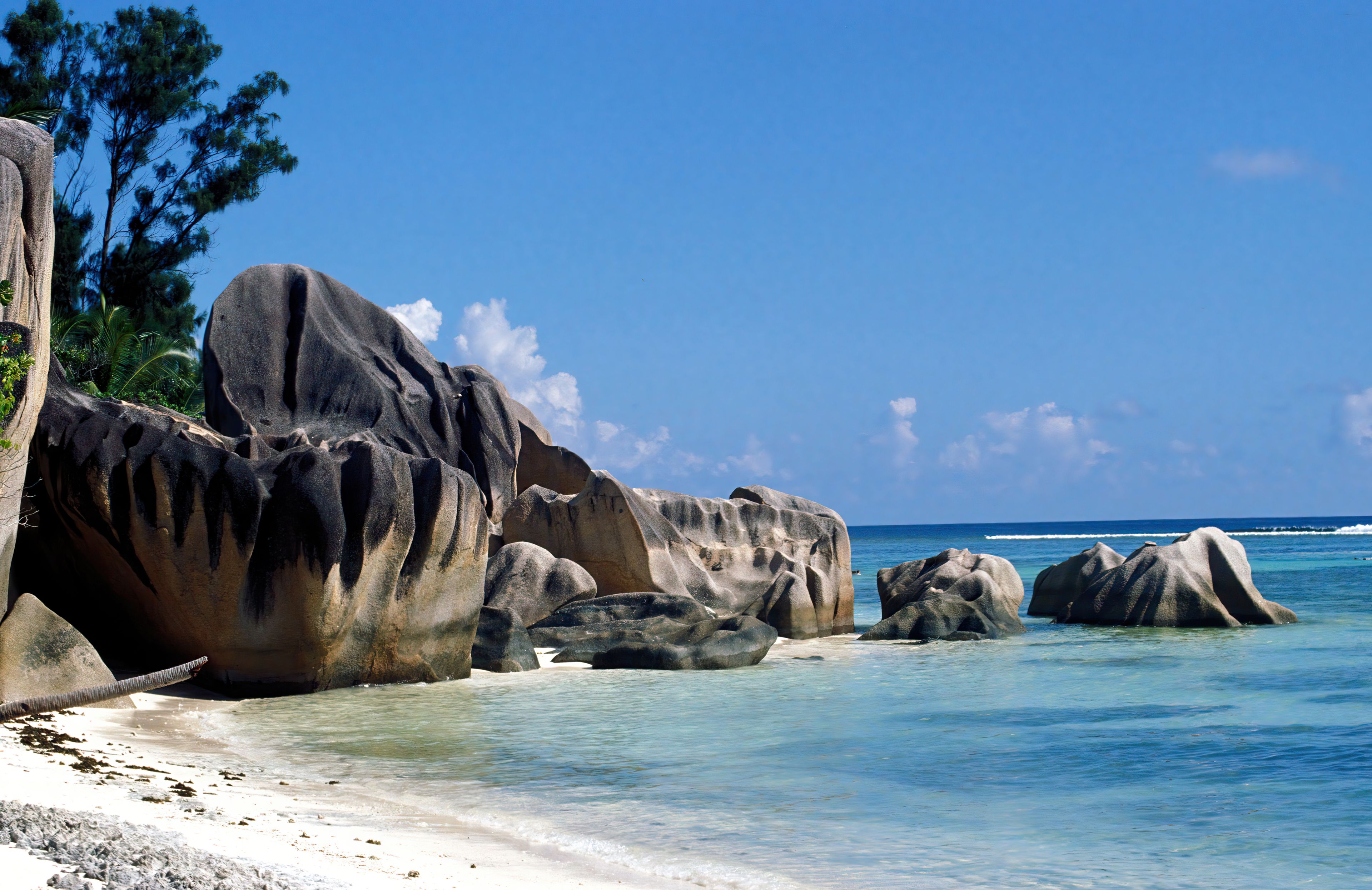
Anse Source d’Argent
Enter at dawn through L’Union Estate and the famous boulders feel like they’re still waking up.
Anse Source d’Argent is the image that sells Seychelles to the world—granite the color of warm bread crust, water like blown glass, palms leaning as if they know they’re being watched. But its real power isn’t the postcard. It’s the way the place changes when you arrive before the beach is “open” in everyone’s mind and you let the island set the pace.
Most people funnel in through the same beach gate, rush the same few rocks, take the same frame, then leave thinking they’ve “done” it. They miss that Anse Source d’Argent is not just a beach—it’s an estate-to-shore transition, a slow unfurling from vanilla-sweet air and old machinery to salt and light.
Arriving at first light through L’Union Estate gives you something rarer than a clear photo: a quiet, bodily sense of La Digue’s morning—cool shade on your skin, distant roosters, the first lick of sun catching granite. You don’t just see the beach. You meet it.
The estate is the real entrance—your eyes need the slow build
Anse Source d’Argent is famous enough to arrive pre-loaded in your head. That’s exactly why you want the longer approach. Entering through L’Union Estate at first light isn’t just a logistical trick to beat the crowds; it’s a reset button for your attention. The estate path is a kind of palate cleanser. You move from inland shade to coastal glare in gradual steps, and your senses recalibrate with each one. The vanilla plantation gives you sweetness on the air; the old copra mill and weathered structures add a faint metallic, woody note. By the time the sea becomes audible, you’re already tuned in to small sounds—geckos clicking, palm fronds brushing, your own breathing. Then the boulders land differently. In the harsh midday churn, they read as a backdrop for a swimsuit shot. At dawn, they’re sculptural and specific: rounded edges polished by time, darker seams where water has run, tiny tide-pools collecting last night’s sky. You notice how the beach isn’t one stage but a sequence of coves, each with a slightly different mood—one open and bright, another tucked and whisper-quiet. And there’s a practical truth inside the poetry: the early tide and low angle of sun give the lagoon its cleanest colors, while the estate walk keeps you out of the bottleneck that forms at the beach gate later. You arrive unhurried, and the place meets you with its best manners.
You start in the blue hour, when La Digue still feels rinsed and private. At L’Union Estate, the air is damp and faintly sugary—vanilla and frangipani threaded with the earthy smell of wet leaves. Your footsteps land soft on sandy paths as the estate wakes: a bicycle bell somewhere, a worker’s low greeting, the creak of an old cart. Past the plantation and the quiet bones of colonial-era buildings, you follow the path toward the sea and the sound changes first—cicadas fade, surf appears, steady and breath-like. The light slides in sideways, turning the granite boulders ahead into sculpted shoulders, their surfaces mottled with lichen and salt. When you step onto the sand, it’s still cool underfoot, pale and fine, and the lagoon holds that early-morning clarity—shallows over sand, then a faint green drop where seagrass begins. You wade in without thinking, water at your ankles, and the beach—so often loud in photos—feels intimate, almost domestic, like a room you’ve entered quietly so you don’t wake anyone.
The Water
In the morning, the lagoon reads in layers—clear shallows over pale sand, then mint-green, then a cooler jade where seagrass thickens. When the sun is low, the surface stays glassy enough to mirror the granite, with ripples drawing thin silver lines.
The Cliffs
This is La Digue granite at its most theatrical—enormous, time-worn boulders stacked and leaned as if placed by hand. Behind them, palms and takamaka trees soften the edges, while the reef offshore calms the water into a lagoon that feels more like a sheltered pool than open ocean.
The Light
First light to early morning gives you texture—granite becomes velvety and dimensional instead of flat and blinding. Late afternoon can be beautiful too, but it’s more crowded and the shadows cut harder; dawn is when the scene looks deliberate, not performed.
Best Angles
The first granite corridor (just beyond the main sandy opening)
You get a natural frame—boulders on both sides, a ribbon of water ahead—without the wide, busy feel of the central beach.
The shallow lagoon edge at low tide
Kneel close to the waterline and the sea turns into a reflective plane, doubling palms and granite for a calmer, more editorial image.
The tucked cove to the right of the busiest rock cluster
It compresses the scene into intimacy—sand, one dominant boulder, and a sliver of lagoon—so the place feels personal rather than iconic.
Behind-the-boulder peek-through toward the reef line
Use the granite as a foreground curtain; it adds scale and reveals the protected lagoon beyond, which most people never show.
Under the takamaka shade line
From the tree edge, you capture the transition from cool green shade to sunlit sand—exactly what makes the dawn approach feel different.
Bring small cash for the L’Union Estate entry fee and any extras; don’t assume card payment is available or reliable.
Wear water shoes if you plan to explore between boulders—some patches hide sharp coral fragments and sea urchins.
Pack a light towel and a dry bag; the best compositions often involve wading into the shallows for a lower angle.
Go early with a simple plan: walk past the first busy beach opening and keep moving until the sound of voices thins.
Respect the estate setting—stick to paths, don’t climb unstable boulders, and avoid leaving anything behind, including fruit peels.
Handpicked Stays & Tables
Places chosen for beauty and intention, not algorithms. Each one is worth your time.

Le Domaine de L’Orangeraie
La Digue (near La Passe)
A polished, design-forward base with a sense of retreat—lush gardens, spa calm, and the kind of breakfast that makes dawn starts feel effortless. You’re well placed for early rides before the island fully stirs.

Le Repaire Boutique Hotel
La Passe beachfront, La Digue
Small, stylish, and right on the water with an Italian soul and an easy elegance. It’s ideal if you want to roll out early, grab a coffee, and be on the estate path before the day gets loud.

Le Repaire Restaurant
La Passe, La Digue
A reliable, elevated option for pasta, seafood, and a well-judged wine list—rare comforts on an island where simplicity is the norm. Come for a late lunch after the beach, when salt and sun have made you hungry in a very specific way.

Fish Trap Restaurant
La Passe, La Digue
Creole-leaning seafood in a breezy setting, with the kind of straightforward cooking that suits island appetite. Order fresh fish and let the day slow down again.
When you arrive through L’Union Estate at first light, Anse Source d’Argent stops being a photograph you chase and becomes a morning you inhabit.