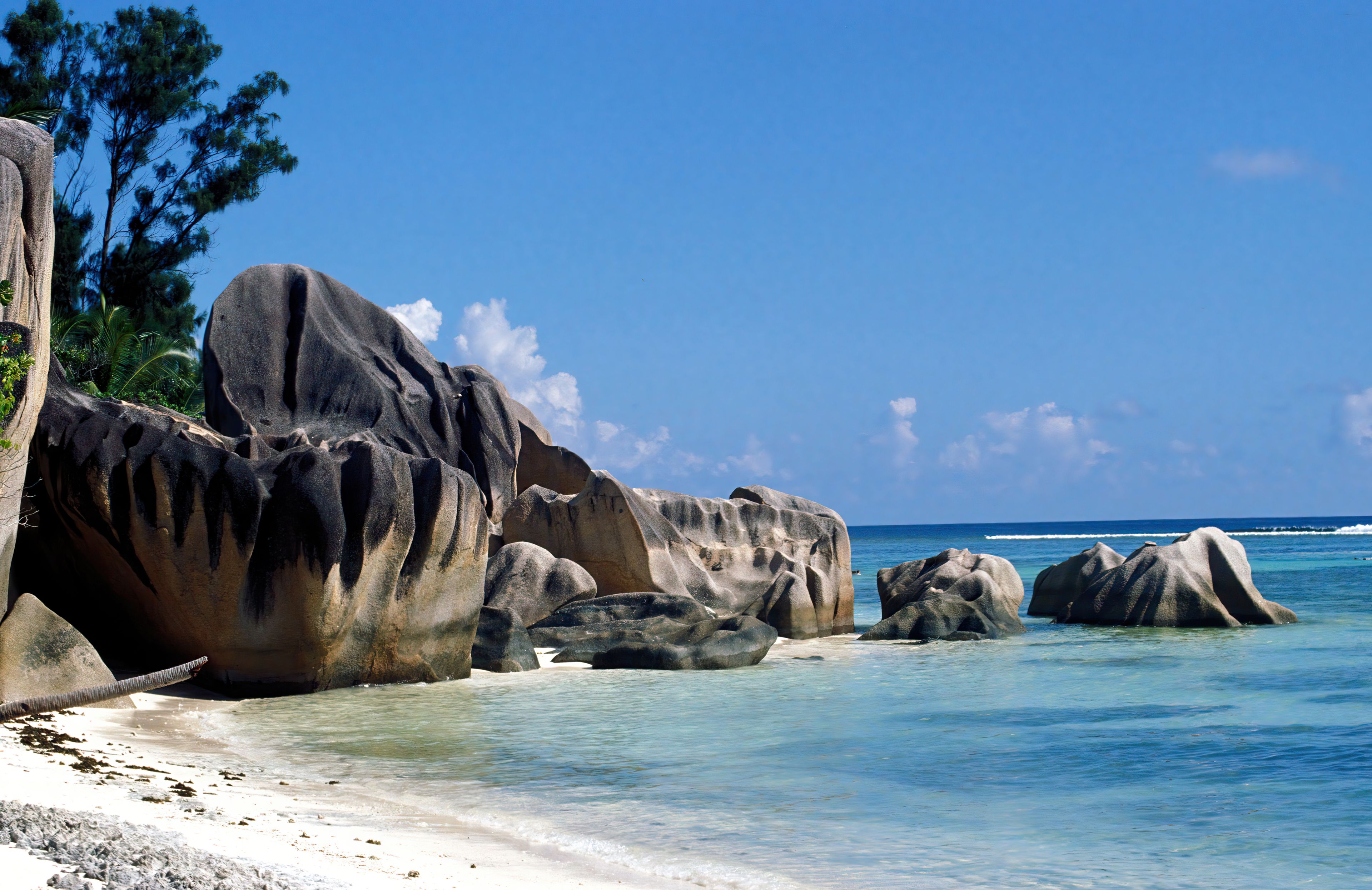
Anse Source d’Argent
On La Digue, the real spectacle begins when the wind finally stops touching the water.
Anse Source d’Argent matters because it teaches you how scale works in the tropics. What looks like a simple beach from a feed is, in person, a choreography of granite, shallow lagoon, and reef—each element controlling what you can see, hear, and feel minute by minute.
Most people arrive for the boulders and leave with the postcard. They miss the moment after the trade winds soften, when the lagoon stops moving and the whole bay becomes a reflective surface—turning granite into sculpture and your own shadow into part of the composition.
The payoff is quiet, not adrenaline. You feel your shoulders drop as the water goes glassy and the soundscape thins to a hush of small waves over sand…like the beach is finally speaking at its natural volume.
The Lagoon’s Pause Button
Anse Source d’Argent isn’t one beach. It’s a sequence of small coves connected by sand tongues and granite corridors, and the difference between “nice” and “unforgettable” is timing—specifically, the lull that arrives when the trade winds drop. In the southeast trades (common May to September), the lagoon can look busy: wind-textured, sparkling, constantly rearranging reflections. It’s beautiful, but it reads as movement. When the wind pauses—often in the early morning, sometimes again late afternoon—the lagoon becomes legible. You suddenly see the architecture: the fringing reef acting like a breakwater, the way the boulders funnel water into narrow channels, the gradient from milky shallows to jade pockets where the sand dips. That stillness changes how you experience your own body. You stop bracing against wind. You start noticing temperature layers—warm at the surface, cooler where the sand drops. You hear details: the tiny clatter of wavelets in rock hollows, the dry rattle of palm fronds far above, the occasional call of a seabird crossing the bay. Photographs get cleaner, too, because the water holds reflections instead of shredding them. The famous granite becomes less of a backdrop and more of a subject—its pink-beige mineral flecks, black lichen freckles, and salt-polished curves suddenly visible. Stay for the lull and the beach stops performing for crowds…then gives you something quieter and far rarer: clarity.
You enter through L’Union Estate with the sweetness of vanilla and sun-warmed earth in the air, bicycle tires whispering over packed sand. The first glimpse isn’t a reveal so much as a slow focus: pale granite stacked like sleeping animals, palms angled by years of wind, the lagoon spread thin and luminous. When the trade winds ease, the surface changes character. Ripples fade, then vanish. The water turns into a sheet of blown glass with a faint green tint, so clear you can track the grains of sand shifting under your feet and watch tiny fish flash like dropped sequins. You wade instead of swim—ankle to knee deep for long stretches—and the reef beyond the lagoon becomes a dark line that keeps the ocean’s force at a respectful distance. Every step has a sound: a soft crunch of coral sand, the tick of shells, the low, measured push of water through rock corridors. In that stillness the boulders feel larger, closer, more deliberate…as if the beach has been arranged for your eyes alone.
The Water
In the lagoon the water reads as pale celadon with a milky edge over sand, then shifts to clear jade where the bottom dips. When the wind drops, reflections sharpen—granite and sky appear as faint overlays on the surface, like double exposure.
The Cliffs
This is La Digue’s signature geology: immense granite boulders weathered into rounded, stacked forms, set against a shallow, reef-protected bay. The reef line out to sea calms the water and creates a wide wading zone—more lagoon than open ocean.
The Light
Early morning brings soft, low-contrast light that reveals texture in the granite and keeps the lagoon looking translucent. Late afternoon adds warmth—gold on the rock faces and a gentle blush in the sand—while shadows carve the boulders into stronger shapes.
Best Angles
Granite corridor between the central coves
You frame the lagoon through a natural rock passage—instant depth, with leading lines of sand and water pulling the eye outward.
Shallow sandbar facing the reef line
The reef becomes a dark horizon stripe, making the lagoon’s color gradient the main subject rather than the crowds.
Palm-and-boulder edge at the waterline
From here the scale clicks—palms lean in, granite looms, and the lagoon looks like a polished stage underfoot.
Low angle at ankle depth (phone near the surface)
When the water goes glassy, you capture mirror reflections and see-through sand detail in one frame—best during wind lulls.
Cove corner tucked behind the largest boulder cluster
You get intimacy and quiet—smaller compositions, less background clutter, and the sound of water working through rock pockets.
Bring reef shoes or sturdy water sandals—the sand is soft, but the rock shelves and coral bits can be sharp at the edges of coves.
Carry cash or a card for L’Union Estate entry, and keep your ticket accessible if you wander between coves.
Pack water and something salty to eat; once you’re settled among the boulders, you won’t want to keep leaving your spot.
Use high-SPF sunscreen and reapply—shade is selective here, and the lagoon’s pale sand reflects light onto your face and shoulders.
Check the day’s wind and tide feel by looking at the lagoon surface: if it’s already rippled mid-morning, plan to return early the next day for the glassy moment.
Handpicked Stays & Tables
Places chosen for beauty and intention, not algorithms. Each one is worth your time.

Le Domaine de L’Orangeraie Resort & Spa
La Digue (near La Passe)
A polished, leafy retreat with a real sense of privacy—wood, stone, and warm lighting that suits the island’s slower rhythm. You’re well placed for early departures, when Anse Source d’Argent still feels like it’s waking up.

La Digue Island Lodge
Anse Réunion
Classic island lodging with immediate beach access and an easy, unfussy atmosphere. It’s practical for cyclists and perfect if you want to be out the door at dawn without a long ride.

Le Repaire Boutique Hotel & Restaurant
La Passe, La Digue
A stylish, reliable stop for well-made Italian dishes and seafood, with a breezy beachfront setting. It’s ideal for a late lunch when salt is still on your skin and you want something crisp and cold.

Fish Trap Restaurant
La Passe waterfront, La Digue
Local seafood done with confidence—grilled fish, Creole flavors, and sunset-facing tables when the harbor light turns honeyed. Book ahead in high season if you want the waterfront seats.
Wait for the trade winds to loosen their grip, and the lagoon answers with a stillness that makes every granite curve feel newly drawn.