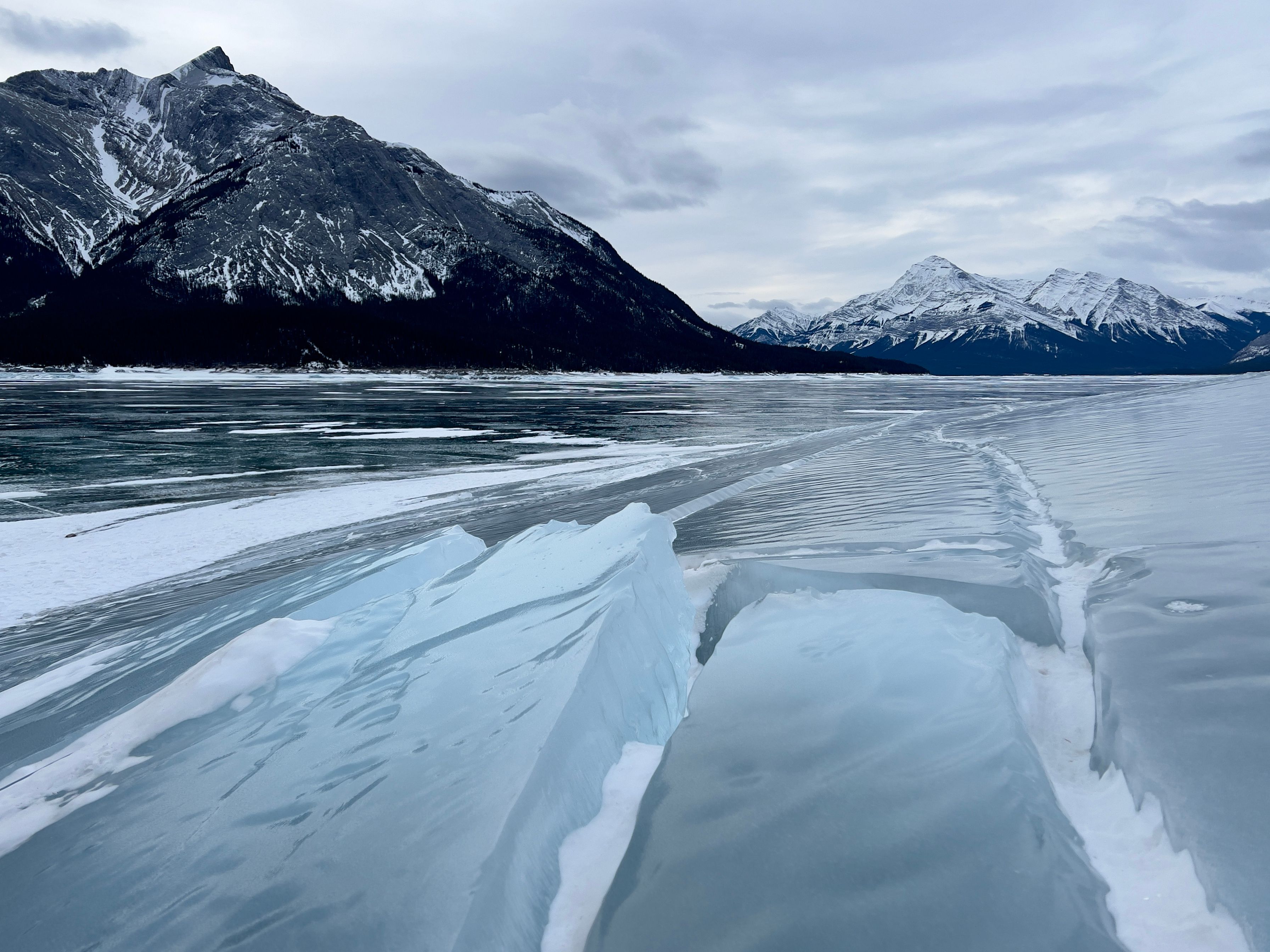
Abraham Lake
Where the highway fades, and the wind becomes the loudest thing.
Abraham Lake is a long, wind-shaped stretch of water held between slopes and sky.
It isn’t a classic mountain lake—more reservoir than postcard—and that’s why its moods feel raw and changeable.
It pulls you in with quiet you can measure: a place where sound thins out and attention sharpens.
The North Shore When the Trucks Stop Passing
Most people meet Abraham Lake from the road and assume the road is the story—pullout, quick look, back in the car. But the north shore has a way of rewriting that, especially if you walk just far enough that the tires on Highway 11 become a soft, intermittent hiss instead of a presence. The ground changes first: pale stones, driftwood laid like punctuation, small shelves where the water pauses. Then the lake’s scale starts to feel less like “scenic” and more like weather. On calm days, you can hear the reservoir working—tiny clicks of ice in the shoulder seasons, the dry rattle of reeds, the wind worrying at pebbles. In winter, when the surface locks, the north shore becomes a listening place. You don’t just look for the famous methane bubbles; you watch the ice’s clarity shift with each step, as if the lake is deciding what to reveal. The quieter you get, the larger it feels.
The First Windless Break After Sunset
Abraham Lake transforms in the small gap after sunset when the day’s wind finally lets go. It doesn’t happen every evening—this lake is known for its restlessness—but when it does, it feels like someone lowered the volume on the whole valley. The surface, usually corrugated, relaxes into longer lines. Distant shore details sharpen: dark bands of spruce, the pale scars of rock, the thin geometry of ice near the edges. In late fall and winter, that pause can arrive as a sudden stillness in the cold, and the lake becomes more reflective than you expect from a place that often looks steel-hard. In summer, it’s a gentler shift: the air cools, the water darkens, and the last light settles into the slopes across from you. You notice how wide the silence is once the traffic thins—how the lake keeps holding it, minute by minute, until the first true darkness.
The Reflections
When the wind drops, the lake gives clean, horizontal reflections that feel stretched—mountain tones laid into the surface like ink. In winter, reflections become subtler, broken by ice clarity and faint snow dusting, more mirror-fragment than mirror.
The Water
In open-water seasons, the color leans glacial turquoise to milky teal, fed by silt-rich North Saskatchewan River water and the fine rock flour suspended in it. Under overcast skies it turns slate-green, a colder, more mineral version of itself.
The Landscape
The lake sits in a wide, exposed corridor framed by the Rockies’ front ranges and long, treeless slopes that make weather visible. The feeling is spacious and spare—less forested intimacy, more wind, rock, and distance.
Best Angles
North shore pullouts along Highway 11 (David Thompson Highway)
Park at a signed pullout and walk down to the stones; face south/southwest to layer water first, then the opposing slopes, keeping the horizon low when the surface is calm.
Preacher’s Point area (north side viewpoints)
Climb just enough for elevation; look along the lake’s length to emphasize how it narrows into distance, especially in late-day side light.
Wind-sculpted ice shelves near the shoreline (winter)
Creators often shoot only the bubble stacks; frame bubbles with a thin strip of shoreline debris or frost patterns to show scale and texture, not just the novelty.
A quiet driftwood pocket away from the main pullouts
Turn your back to the obvious view and watch the small waterline movements; the intimate angle is the sound of stones shifting and the way the lake edits your thoughts.
Crowd pattern — Winter weekends (especially sunny days) draw photographers to bubble ice; weekdays and shoulder-season evenings feel noticeably emptier once day-trippers move on.
Effort level — Mostly short, uneven shoreline walks on rocks and ice; the exposure to wind can make it feel more demanding than the distance suggests.
Access note — Conditions change fast: snow drifts, glare ice, and sudden wind. Check Alberta 511 road reports for Highway 11 and be prepared for limited services in winter.
What to bring — Ice cleats in winter, windproof layers year-round, a thermos, and a headlamp if you plan to stay through the post-sunset stillness.
Handpicked Stays & Tables
Places chosen for beauty and intention, not algorithms. Each one is worth your time.

Aurora Borealis (Nordegg)
Nordegg, Alberta

The Crossing Resort
Saskatchewan River Crossing, Alberta

Miners Cafe
Nordegg, Alberta

Ramada by Wyndham Rocky Mountain House - Restaurant options
Rocky Mountain House, Alberta
Stay until the wind stops, and you’ll hear the lake take back its own name.